Using Sonor singles as the design, we're ideating bass bars using 2" x 3/4" maple and salvaged organ pipes as resonator boxes.
These bass bars use wide maple tone bars coupled to short, sealed wooden resonators. Instead of tuning pipes to exact acoustic lengths, we scale the cross‑section to maintain strong low‑frequency response while keeping the resonators compact and workshop‑friendly. Bar widths and pipe bores graduate smoothly to maintain consistent timbre across the range.
- The tone bars are hard maple, ¾″ thick, widths graduated from 4″ (C2) to 2″ (F4).
- Bar lengths are starting blanks; final tuning is achieved by undercutting and small end trims.
- Pipe lengths are chosen for practical handling and broad‑band resonance, not strict half‑wave tuning.
- Nodal offset is the distance from each end of the tone bar where it's supported (22-23% of the bar length).
- The sound hole is centered under the bar’s midpoint, with a ½″ air gap between bar and pipe.
- All resonators are sealed at both ends; any flue or mouth openings on salvaged pipes must be fully blocked.
Undercut the bars gingerly as needed.
Image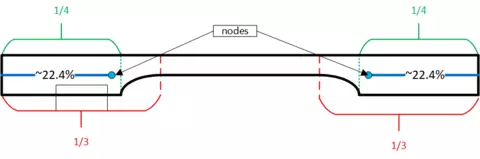 NameIdeal tone bar shape
| Note | Freq (Hz) | Bar width | Bar length (start) | Nodal offset | Pipe internal size | Pipe length | Hole center | Hole diameter |
|---|---|---|---|---|---|---|---|---|
| C2 | 65.41 | 4″ | 26½″ | 5¾″ | 4″ × 4″ | 60″ | 30″ | 2¼″ |
| C♯2 | 69.30 | 3⅞″ | 26″ | 5¾″ | 3⅞″ × 3⅞″ | 58″ | 29″ | 2⅛″ |
| D2 | 73.42 | 3¾″ | 25½″ | 5⅝″ | 3¾″ × 3¾″ | 56″ | 28″ | 2⅛″ |
| D♯2 | 77.78 | 3⅝″ | 25″ | 5½″ | 3⅝″ × 3⅝″ | 54″ | 27″ | 2″ |
| E2 | 82.41 | 3½″ | 24½″ | 5⅜″ | 3½″ × 3½″ | 52″ | 26″ | 2″ |
| F2 | 87.31 | 3½″ | 24″ | 5¼″ | 3½″ × 3½″ | 48″ | 24″ | 2″ |
| F♯2 | 92.50 | 3¼″ | 23½″ | 5⅛″ | 3¼″ × 3¼″ | 46″ | 23″ | 1⅞″ |
| G2 | 98.00 | 3¼″ | 23″ | 5″ | 3¼″ × 3¼″ | 44″ | 22″ | 1⅞″ |
| G♯2 | 103.83 | 3″ | 22½″ | 5″ | 3″ × 3″ | 42″ | 21″ | 1⅞″ |
| A2 | 110.00 | 2⅞″ | 22″ | 4⅞″ | 2⅞″ × 2⅞″ | 40″ | 20″ | 1¾″ |
| A♯2 | 116.54 | 2¾″ | 21½″ | 4¾″ | 2¾″ × 2¾″ | 38″ | 19″ | 1¾″ |
| B2 | 123.47 | 2⅝″ | 21″ | 4⅝″ | 2⅝″ × 2⅝″ | 36″ | 18″ | 1¾″ |
| C3 | 130.81 | 2½″ | 19½″ | 4⅜″ | 2½″ × 2½″ | 34″ | 17″ | 2¼″ |
| C♯3 | 138.59 | 2⅜″ | 19″ | 4¼″ | 2⅜″ × 2⅜″ | 33″ | 16½″ | 2⅛″ |
| D3 | 146.83 | 2⅜″ | 18½″ | 4⅛″ | 2⅜″ × 2⅜″ | 32″ | 16″ | 2⅛″ |
| D♯3 | 155.56 | 2¼″ | 18″ | 4″ | 2¼″ × 2¼″ | 31″ | 15½″ | 2″ |
| E3 | 164.81 | 2¼″ | 17½″ | 3⅞″ | 2¼″ × 2¼″ | 30″ | 15″ | 2″ |
| F3 | 174.61 | 2¼″ | 17″ | 3¾″ | 2¼″ × 2¼″ | 29″ | 14½″ | 2″ |
| F♯3 | 185.00 | 2⅛″ | 16½″ | 3⅝″ | 2⅛″ × 2⅛″ | 28″ | 14″ | 1⅞″ |
| G3 | 196.00 | 2⅛″ | 16″ | 3½″ | 2⅛″ × 2⅛″ | 27″ | 13½″ | 1⅞″ |
| G♯3 | 207.65 | 2⅛″ | 15½″ | 3⅜″ | 2⅛″ × 2⅛″ | 26″ | 13″ | 1⅞″ |
| A3 | 220.00 | 2″ | 15″ | 3¼″ | 2″ × 2″ | 25″ | 12½″ | 1¾″ |
| A♯3 | 233.08 | 2″ | 14½″ | 3⅛″ | 2″ × 2″ | 24″ | 12″ | 1¾″ |
| B3 | 246.94 | 2″ | 14″ | 3⅛″ | 2″ × 2″ | 23″ | 11½″ | 1¾″ |
| C4 | 261.63 | 2″ | 13½″ | 3″ | 2″ × 2″ | 22″ | 11″ | 1⅝″ |
| C♯4 | 277.18 | 2″ | 13″ | 2⅞″ | 2″ × 2″ | 21″ | 10½″ | 1⅝″ |
| D4 | 293.66 | 2″ | 12⅞″ | 2⅞″ | 2″ × 2″ | 20″ | 10″ | 1½″ |
| D♯4 | 311.13 | 2″ | 12½″ | 2¾″ | 2″ × 2″ | 19½″ | 9¾″ | 1½″ |
| E4 | 329.63 | 2″ | 12″ | 2⅝″ | 2″ × 2″ | 19″ | 9½″ | 1½″ |
| F4 | 349.23 | 2″ | 11¾″ | 2⅝″ | 2″ × 2″ | 18½″ | 9¼″ | 1½″ |
Tuning workflow (in inches)
For each note:
- Cut bar. Use the target length from the range above, add ~½ inch extra.
- Mount on supports. Place supports at 22–23% of length from each end (measure in inches).
- Tune bar. Undercut underside to lower pitch.
- Tiny end trims (¹⁶–⅛ inch) to raise pitch if needed.
- Build pipe.
- Cut off the sound-making end square and seal it.
- Cut pipe to theoretical length. If the pipe has a stopper, add 4" to the length to take advantage of it.
- Cut the sound hole into the pipe.
- Place the bar over the hole, then trim length or move stopper to match bar pitch.
- Fine tune by adjusting the rail height or hole diameter until the bar stays clear but the pipe adds that bass bloom.
- Printer-friendly version
- Log in to post comments
Project type