Bass xylophone test bars
Bass xylophone test bars
Here's some notes for cutting and tuning wooden bars to make an extended bass range or an add-on instrument for lower notes.
Guide: Cutting and Preparing A2, E3, and C4 Test Bars From One 5″ × 48″ Maple Board
Material: ¾″ × 5″ × 48″ quarter‑sawn hard maple
Resonators: salvaged organ pipes
Starting dimensions:
| Note | Frequency (Hz) | Bar Start Length (in) (2" × 3/4" Maple) | Resonator Start Length (in) (2" × 2" Closed Tube) |
|---|---|---|---|
| C2 | 65.41 | 28.0 | 51.6 |
| C♯2 / D♭2 | 69.30 | 27.2 | 48.7 |
| D2 | 73.42 | 26.4 | 46.0 |
| D♯2 / E♭2 | 77.78 | 25.7 | 43.4 |
| E2 | 82.41 | 24.9 | 41.0 |
| F2 | 87.31 | 24.2 | 38.7 |
| F♯2 / G♭2 | 92.50 | 23.5 | 36.5 |
| G2 | 98.00 | 22.9 | 34.5 |
| G♯2 / A♭2 | 103.83 | 22.2 | 32.5 |
| A2 | 110.00 | 21.6 | 30.7 |
| A♯2 / B♭2 | 116.54 | 21.0 | 29.0 |
| B2 | 123.47 | 20.4 | 27.3 |
| C3 | 130.81 | 19.8 | 25.8 |
Experiment with the bars to get the right pitch and tone.
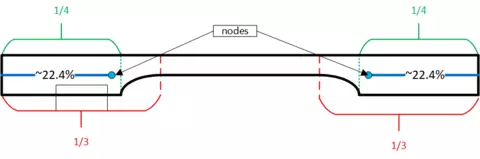
Here's an "ideal" representation of a solid wooden bar:
- underside curve starts at 1/4 the bar length and ends at 1/3 the bar length
- middle 1/3 bar length is flat
- mounting node holes are about 22.4% from the ends
Image
Name
Ideal tone bar shape
Resonators
- All resonators are quarter‑wave tubes, tuned by trimming the bottom end.
- Top end is capped with a side‑hole mouth placed behind the lower node of the bar.
- I'm using salvaged organ pipes for the resonators.
Project type